
 By
Young minds possess an innate curiosity about how the world works, constantly asking why plants bend toward light or how water vanishes from wet roads. However, when primary school curricula transition from general curiosity to formal scientific inquiry, many young learners stumble. Abstract topics like heat transfer, electrical circuits, and photosynthesis require children to visualise processes that they cannot easily see with the naked eye. Memorising textbook definitions without deep conceptual clarity leads to confusion when tackling tricky application questions in examinations. Bringing learning into a comfortable domestic setting bridges this gap effectively. Engaging in Primary Science tuition at home allows dedicated tutors to turn abstract theories into tangible, memorable experiences using everyday household objects. Tailoring lessons to a child’s unique learning pace fosters genuine scientific thinking and builds lasting academic confidence.
From Theory to Kitchen Bench: Bringing Experiments to Life
Abstract scientific models make far more sense when young learners can touch, see, and test them in real time.
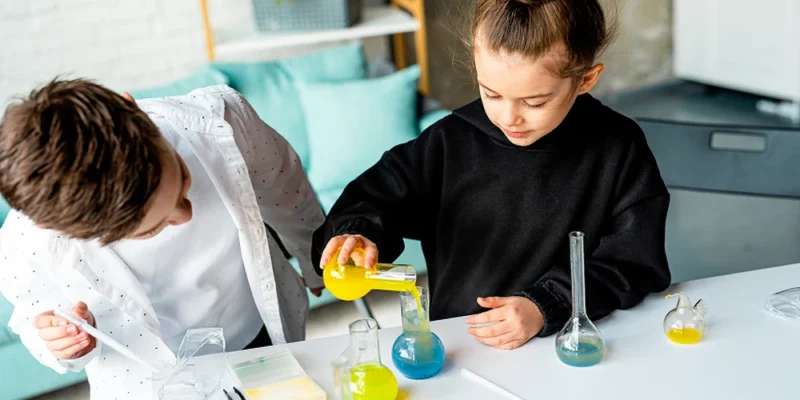
A standard classroom setting often restricts hands-on experimentation due to time constraints and large class sizes. At home, a private tutor transforms the kitchen table into an interactive laboratory using safe, everyday household items:
- Visualising Heat Transfer – Melting ice cubes on metal spoons versus wooden spatulas demonstrates thermal conductivity far more clearly than a textbook diagram ever could.
- Exploring Water States – Placing a cold glass of ice water on a humid afternoon illustrates evaporation and condensation instantly through real-world observation.
- Testing Electrical Circuits – Assembling simple battery-and-bulb kits allows students to troubleshoot open and closed circuits physically, locking in electrical concepts.
- Demonstrating Plant Transport – Placing celery stalks in dyed water reveals how xylem tubes transport liquid through plant stems right before a child’s eyes.
Utilising personalised Primary Science tuition at home ensures your child engages directly with scientific phenomena, turning confusing theories into clear, intuitive insights.
Deconstructing Exam Keywords: Teaching the Language of Inquiry
Mastering scientific concepts forms only half the battle; expressing that knowledge using precise examination keywords determines actual test scores.
Examiners award marks based on specific scientific vocabulary and structured answering techniques. Many students understand how a process works conceptually but lose marks because they use casual, everyday language instead of precise terminology like “absorbs heat,” “expands,” or “conducts electricity.” A home tutor works closely with your child to deconstruct complex open-ended questions step by step. Tutors teach students how to identify the core scientific concept within a scenario, highlight key variables, and structure answers using the required claim-evidence-reasoning format. Refining these answering techniques early prevents frustration and ensures your child’s written answers reflect their true understanding.
Holistic Family Academic Growth: Balancing Primary and Pre-University Goals
Supporting a young learner’s primary education forms just one part of a family’s broader academic journey.
- Primary Level Support – Focuses on building foundational conceptual clarity and scientific curiosity through hands-on home experiments and guided inquiry to simplify abstract ideas.
- Secondary Level Advancement – Focuses on applying analytical thinking to multi-disciplinary topics by practising structured answering techniques and mastering exam paper formats.
- Junior College Level Rigour – Focuses on mastering advanced literary, linguistic, or scientific complexity by enrolling in specialised support like MindFlex JC Chinese tuition or advanced A-Level prep.
Managing multiple academic milestones across different age groups requires a balanced, strategic approach. While younger siblings benefit from interactive Primary Science tuition at home to build foundational confidence, older siblings facing pre-university hurdles need high-level subject mastery. Securing targeted guidance, such as enrolling older students in specialised MindFlex JC Chinese tuition, ensures older teenagers tackle advanced language demands effectively. Supporting each child with age-appropriate academic resources maintains low stress levels and high performance across the entire household.
Cultivating Confidence: The Comfort of Home-Based Learning
A familiar home environment removes the fear of making mistakes, encouraging children to ask questions freely.
In busy classroom environments, shy students often hesitate to raise their hands when they feel confused about abstract topics. Home-based learning creates a safe, judgment-free space where tutors tailor explanations to match a child’s specific learning style-whether they learn best through visual drawings, verbal discussions, or physical models. Tutors identify specific learning gaps quickly, adjusting lesson plans on the fly rather than rushing through a rigid syllabus. This personalised attention builds self-assurance, transforming a hesitant student into an enthusiastic, active learner who approaches Science examinations with total confidence.
Igniting Curiosity: Empowering Your Child’s Scientific Journey
Simplifying abstract primary science concepts requires moving beyond rote memorisation to embrace hands-on experimentation, structured keyword practice, and personalised guidance. Providing a supportive home learning environment equips your child with the analytical skills and confidence needed to achieve lasting academic success.
Frequently Asked Questions
Why do primary students find abstract science topics so challenging?
Abstract topics require children to visualise unseen processes like heat energy or microscopic cell functions, which can feel disconnected from their daily physical experiences without visual aids.
How does home tuition help with open-ended science questions?
Home tutors provide one-on-one guidance to teach students how to identify question keywords, analyse data trends, and construct precise answers using mandatory scientific terminology.
Is home science tuition suitable for primary 3 and 4 students?
Yes, starting early in primary 3 or 4 establishes strong foundational scientific thinking and prevents misconceptions from forming before students face upper primary examination pressures.
Transform abstract concepts into clear, high-scoring achievements with personalised home-based tutoring tailored to your child’s unique learning needs. Contact MindFlex Education today to learn more.









Comments