
 By
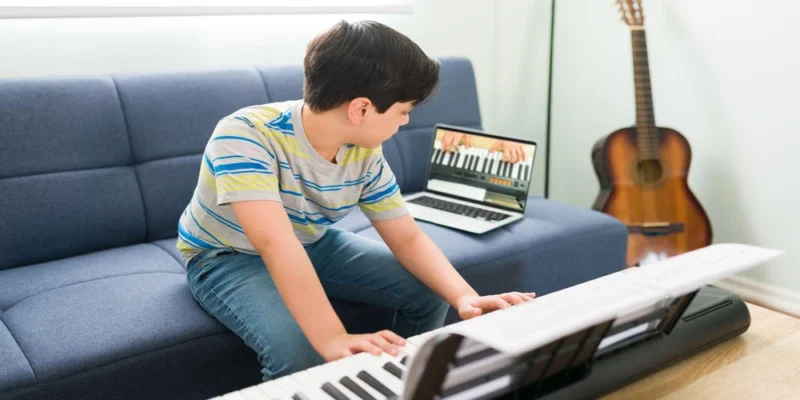
Parents starting a child on piano face a decision that feels like a budget question and has consequences beyond cost. A keyboard fits a flat, costs considerably less, and can be played with headphones at ten at night. An acoustic piano does none of those things and gives a child something a basic keyboard cannot: resistance under the fingers that teaches control. Neither is the obvious answer, and which suits better depends on the home, the child’s age, and how far anyone expects this to go. Four factors separate the options when considering keyboard classes in Singapore against lessons on an acoustic instrument.
1. Touch Sensitivity and Weighted Keys
This is the factor that matters most technically. Acoustic piano keys offer resistance, and pressing harder produces a louder note. That relationship is how a child learns dynamic control and finger strength.
Basic keyboards have unweighted keys with no resistance and often no velocity sensitivity, which means a child learns to press buttons rather than play. Weighted or semi-weighted digital keyboards address this and cost more than entry-level models.
If a keyboard is the practical choice, weighted keys with touch sensitivity are worth prioritising over additional features, since a child practising on unweighted keys and taking lessons on an acoustic instrument experiences two different instruments and progresses more slowly.
2. Space, Weight, and Whether It Fits the Home
Acoustic pianos are large, heavy, and permanent. They need a suitable position away from direct sunlight and air-conditioning; they require periodic tuning, and moving one is a job rather than a task.
Keyboards fit smaller homes, can be put away, and move easily. For families in flats, or those who may relocate, that practicality is a legitimate consideration rather than a compromise. Parents arranging music classes for kids in Singapore frequently find the home instrument decision is settled by available space before touch quality enters the conversation at all, and a weighted keyboard in a home that has room for it beats an acoustic piano nobody could accommodate.
3. Volume Control and When Practice Actually Happens
Acoustic pianos are loud and cannot be turned down. In a flat with shared walls, or a household with young siblings sleeping, that limits practice to particular hours.
Keyboards offer volume control and headphone output, which means a child can practise at times an acoustic instrument would not allow. For a family where the only available practice window is after a younger child’s bedtime, this is not a minor convenience; it determines whether practice happens consistently at all.
4. What the Choice Means Over the Next Few Years
A child starting at five on a weighted keyboard can continue comfortably for several years. As technique develops, particularly once pedalling, tonal control, and more demanding repertoire enter, the limitations of a digital instrument become more apparent.
Many families start with a keyboard and move to an acoustic or higher-grade digital instrument once a child has shown the interest that justifies it. That sequence is sensible rather than a compromise, and it avoids buying an expensive instrument for a child who may not continue past the first year.
Asking the Teacher Before Buying Anything
The most useful step before purchasing is asking whoever will teach your child what they consider a workable minimum and what they would recommend within the first year.
Teachers see the difference between children practising on adequate instruments and those on unsuitable ones, and they will usually give a straight answer about which features matter and which are marketing. That conversation costs nothing and prevents the common outcome of buying something that needs replacing within eighteen months.
Contact Huckleberry Music School to discuss what instrument would suit your home and your child’s stage of learning.












Comments