
 By
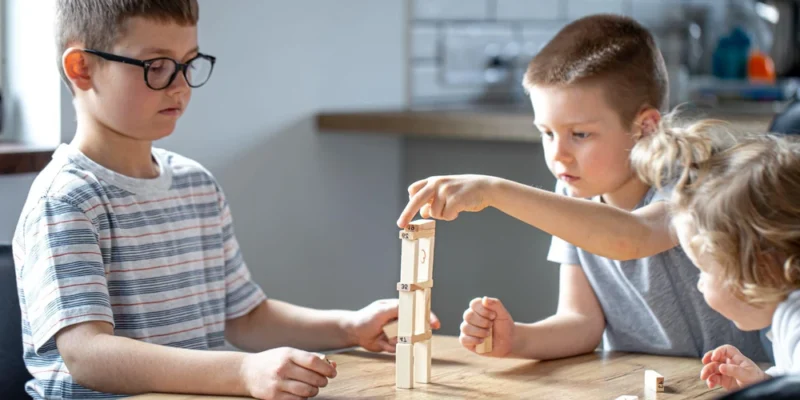
When adults observe young children playing with wooden blocks, splashing water at sensory tables, or dressing up in colourful costumes, play can seem like simple entertainment. However, beneath those laughter-filled moments, young minds are engaging in rapid, complex cognitive development. Play serves as a child’s natural laboratory for exploring the world, testing hypotheses, and making sense of spatial relationships.
Rather than relying on repetitive drills or rigid worksheets, early childhood educators harness open-ended play to spark curiosity and build critical thinking. Enrolling your child in a holistic play-based preschool in Singapore ensures that they develop essential cognitive, social, and analytical skills through meaningful hands-on exploration.
Transforming Everyday Play into Cognitive Challenges
Problem-solving requires more than memorising facts; it demands creative thinking, adaptability, and resilience. Play-based learning environments naturally integrate complex challenges into daily play, prompting children to analyse situations and experiment with solutions independently.
| Play Activity Type | Problem-Solving Skills Developed | Cognitive Impact on Early Learners |
| Block Construction | Spatial awareness, structural balance, trial-and-error reasoning | Teaches children to adjust designs when structures sags or fall |
| Sensory Water Play | Volume estimation, cause-and-effect, measurement logic | Encourages testing how liquids transfer between different containers |
| Dramatic Pretend Play | Negotiation, resource sharing, social conflict resolution | Helps children manage scenarios like running a store or doctor’s clinic |
| Physical Puzzles | Pattern recognition, spatial reasoning, logical sequencing | Strengthens visual logic as children align shapes to fit frames |
When parents choose an engaging preschool in Bukit Batok, experienced teachers act as facilitators during these activities, asking open-ended questions to guide learning without giving away answers.
Developing Emotional Resilience Through Trial and Error
Real-world problem solving often involves encountering unexpected setbacks and trying alternative approaches. Rigid academic setups can make young children fear making mistakes, which dampens their natural willingness to experiment.
Conversely, a supportive play-based preschool in Singapore creates a safe environment where mistakes become exciting learning moments rather than failures. When a child’s paper bridge sags or a clay figure falls apart, educators encourage them to analyse the problem calmly and try a different method.
This hands-on trial-and-error process builds emotional grit and resilience. Children learn that persistence and creative thinking overcome obstacles, a growth mindset that benefits them throughout their academic journey and adult life.
Fostering Collaborative Problem Solving in Group Settings
In today’s interconnected world, solving complex problems almost always requires teamwork, active listening, and clear communication. Play-based learning environments naturally foster peer collaboration as children work together toward shared creative goals.
During collaborative projects, such as constructing a giant cardboard fort or negotiating rules for a pretend game, children share ideas, listen to different perspectives, and resolve disagreements constructively.
Selecting a community-centred preschool in Bukit Batok allows children to build strong social bonds with neighbourhood peers. Working through challenges as a team teaches children compromise, empathy, and leadership skills in a warm, encouraging environment.
Nurturing Lifelong Curiosity and Independent Thought
The ultimate goal of early childhood education is to nurture self-directed learners who love discovering new things. Play-based activities preserve a child’s natural curiosity, turning abstract concepts into concrete, joyful discoveries.
When children direct their own play, they take ownership of their learning journey. They learn to ask thoughtful questions, analyse outcomes, and apply discovered solutions to brand-new situations independently.
By prioritising playful exploration over passive instruction, you give your child a solid foundation for lifelong academic and personal success.
Frequently Asked Questions
How does play-based learning prepare children for primary school?
Play-based learning develops core executive functions, such as focus, critical thinking, emotional self-regulation, and teamwork, which help children adapt quickly to formal primary school environments.
Can play-based activities teach academic subjects like math and science?
Yes, hands-on play naturally introduces mathematical concepts like counting, spatial geometry, and measurement, alongside scientific principles like gravity, buoyancy, and cause-and-effect.
At what age should children start attending a play-based preschool?
Most children benefit from entering a structured play-based environment around 18 months to 3 years old, where they build social confidence and language skills through guided interaction.
Contact Little Seeds Preschool today to schedule a tour and discover the perfect place for your child to grow!










Comments