
 By
By 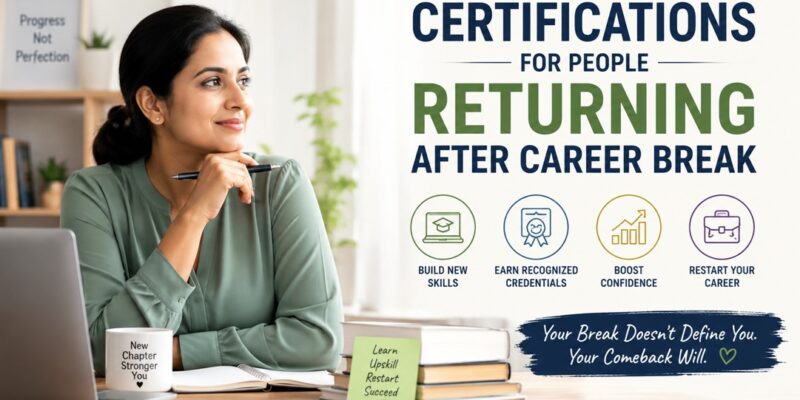
Returning to work after a career break can feel overwhelming. But the right certification can help close the gap on your resume and get you back on solid footing. Whether you took time off for caregiving, health, or personal reasons, there are flexible, recognized credentials available online and in-person across the US, UK, Canada, and Australia — many completable in weeks, not years. Short-course certifications in fields like project management, digital marketing, data analysis, and IT support are consistently valued by employers for returning workers.
What Certifications Are Worth Pursuing After a Career Gap?
This is the first question most people ask — and it is a fair one. Not every certificate holds the same weight. The ones worth your time combine employer recognition, flexible study options, and relatively quick completion.
Google Career Certificates cover fields like data analytics, IT support, project management, and UX design. They are available on Coursera, take three to six months at a self-paced rate, and are designed for people without prior experience. Employers in the US, UK, and Canada actively recruit from this pipeline.
Project Management Professional (PMP) or CAPM from PMI are strong choices if you have any prior project coordination experience. The CAPM in particular suits returners as it requires less work experience than the full PMP.
CompTIA certifications like A+, Security+, and Cloud+ are respected across all four English-speaking markets. They demonstrate hands-on technical knowledge and do not require a degree to sit the exam.
Do Employers Care About Certifications for Career Returners?
Yes — and more than many people expect. Hiring managers often view a recent certification as evidence that a candidate stayed engaged and motivated during their break. It signals initiative without requiring an explanation of the gap itself.
Programs specifically targeting career returners include returnship programs at companies like Amazon, Goldman Sachs, and IBM. These are structured re-entry roles that often prefer candidates who have completed short upskilling courses during their time away.
In the UK, the Career Returners programme and Inclusivity Works actively partner with employers who value returners. Having a Google or LinkedIn Learning certificate on your profile tends to reduce friction in these applications.
What About Free or Low-Cost Options?
Budget should not be a barrier. Several strong options cost little or nothing.
LinkedIn Learning offers individual course completion certificates and is well-recognised by recruiters who view profiles directly. Coursera offers financial aid on most Google Career Certificates. The Open University in the UK has short digital skills credentials. TAFE in Australia delivers accredited short courses at subsidised rates for eligible learners.
In Canada, some provincial workforce development programs fund upskilling for people who have been out of employment. It is worth checking with your local employment centre before paying out of pocket.
Which Fields Have the Best Return on Investment?
For most career returners, the highest-value areas right now are project management, digital marketing, data literacy, and cybersecurity. These fields have strong hiring demand and welcome candidates with transferable skills from previous careers.
Digital marketing certifications from Google (Google Ads, Analytics) and HubSpot are free and respected. They are especially useful if your previous career touched communications, sales, or administration.
Data analysis courses — even introductory ones — set you apart. Many employers now expect basic spreadsheet and dashboard skills across all departments. Google’s data analytics certificate or Microsoft’s Power BI training are practical starting points.
A Realistic Example to Keep in Mind
Consider a teacher who took four years off for family care and wanted to move into corporate training. She completed Google’s Project Management Certificate and a LinkedIn Learning course on instructional design over three months while job searching. Those credentials directly appeared on her resume and led to an interview at a mid-sized company in six weeks.
The certificate did not replace her experience — it reframed it. That is what good re-entry credentials do.
Where to Start If You Are Unsure
If you are not sure which certification fits your background, start by looking at job postings in your target field and note which credentials appear repeatedly. That shortlist is more useful than any generic top-ten list.
Check whether employers in your area mention specific programs. Australian employers, for example, frequently list TAFE qualifications. US postings lean toward Coursera-based Google certs and CompTIA. UK roles often mention CMI or CIPD credentials for management and HR.
Pick one. Finish it. Then decide whether a second makes sense. Starting is the step most people skip.












Comments