
 By
By 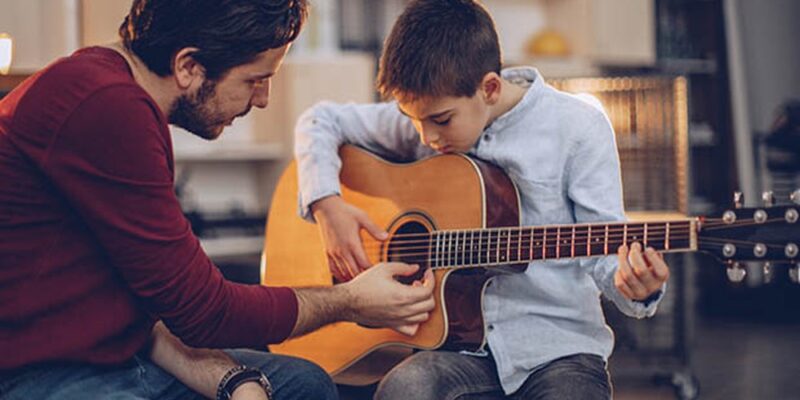
Music lessons in Singapore are available to students at every point in life, from toddlers discovering rhythm to retirees learning an instrument for the first time. The city’s music education sector is mature, competitive and diverse, offering instruction across dozens of instruments and styles through a combination of private studios, established schools and community programmes. The challenge is not finding a lesson but finding the right one.
Why Music Education Stays Relevant in Singapore
Singapore’s approach to education has long valued the arts alongside academic subjects. Music instruction is part of the national curriculum, and private music lessons have been a fixture of Singapore family life for generations. The reasons are well-established: children who study music demonstrate stronger reading comprehension, better mathematical reasoning and greater capacity for sustained attention. These outcomes persist into adulthood.
For adults, the motivations shift. Many adults taking music lessons in Singapore today are rediscovering an instrument they studied in childhood, picking up something they always wanted to learn, or looking for a structured creative practice that takes them away from screens and work pressures. The neurological benefits of learning music continue to accumulate across the lifespan, including improvements in memory, attention and fine motor coordination.
Instruments on Offer
The range of instruments taught in Singapore covers virtually every category. The piano remains the most enrolled-for instrument, partly because of its role in music theory education and partly because it is the most broadly applicable instrument for students who go on to learn others.
The guitar, violin, cello and voice follow close behind. Less common instruments such as the ukulele, drums, flute, clarinet, and trumpet have dedicated studios and communities of students. Traditional Asian instruments including the erhu, dizi, and guzheng are taught at specialist centres and increasingly at mainstream music schools.
Choosing an instrument on the basis of what you find compelling to listen to, rather than what seems practical, produces better outcomes. Students who love the sound of what they are learning practise more willingly.
Individual Versus Group Lessons
Individual lessons are the standard format for most serious students. One-on-one time with a teacher allows for immediate feedback, a pace matched to the individual, and a curriculum designed around specific goals. For students working toward examinations or with particular stylistic aims, individual lessons are difficult to replace.
Group lessons serve a different purpose. They are typically less expensive per session, more social, and particularly useful for beginners who benefit from shared learning experiences. Playing alongside others teaches listening skills and rhythmic accuracy in ways that solo practice does not.
Many students combine both. Individual lessons for technical development and group classes or ensemble participation for the experience of making music with other people.
“The arts teach what cannot be taught through words alone.” – Grace Fu, Singapore Minister for Culture, Community and Youth.
Navigating Music Schools Singapore
Established music schools in Singapore range from large chains with branches across the island to boutique studios specialising in one instrument or style. Both have advantages.
Larger schools offer scheduling flexibility, multiple teachers if a primary instructor is unavailable, and often a clear examination preparation track. Boutique studios offer depth of specialisation and a more personal relationship between teacher, student and family.
When evaluating any school, look at teacher qualifications, the school’s track record with students at your target grade level, and whether the studio environment supports the kind of focused learning you need. Request a trial lesson before committing to a package. The trial session is the only reliable indicator of teaching quality.
Examination Pathways
Music lessons Singapore students pursuing graded examinations typically work toward ABRSM or Trinity College London qualifications. Both programmes are internationally recognised and cover a wide range of instruments. Examinations provide structure, external validation and a series of concrete milestones from beginner to diploma level.
Singapore’s strong culture of academic achievement extends to music examinations. ABRSM Grade 5 and above can contribute to qualification points for secondary school programmes, and many students take examinations seriously as part of their broader educational profile.
Not every student needs or wants to take examinations. A teacher who can offer an honest, individualised recommendation on this question, rather than pushing all students toward examination preparation by default, is a sign of a thoughtful approach to instruction.
Fees and Practical Considerations
Music lessons Singapore fees vary significantly by instrument, teacher qualifications, lesson duration and studio location. For individual lessons, expect to pay between S$40 and S$120 per hour depending on these factors. Community centre programmes are substantially cheaper, typically S$15 to S$40 per session, but offer group instruction at a fixed pace.
Budget for materials separately. Instrument purchase or rental, method books, examination fees and recital costs add to the annual investment. A realistic total budget for a student taking weekly individual music tuition Singapore runs from S$2,000 to S$5,000 per year when all costs are included.
Music lessons in Singapore have never been more accessible, but the quality and fit of instruction vary enough that taking time to evaluate your options before committing produces significantly better outcomes over the long term.









Comments